THE LAWS
16 feathers, 5 grams
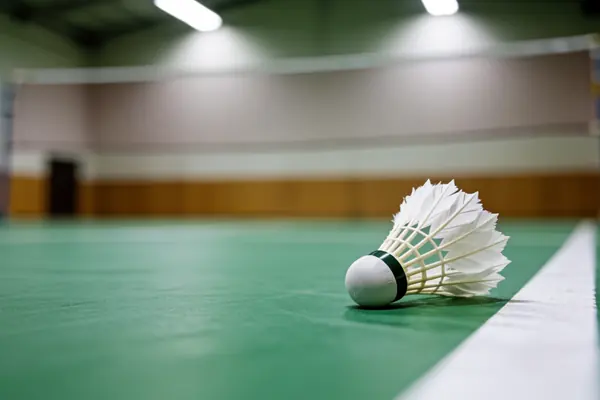
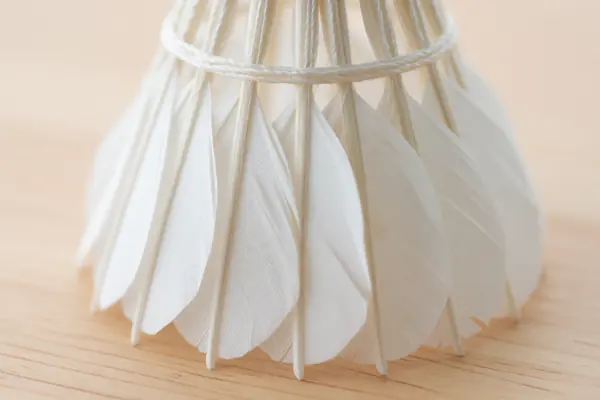
The Laws of Badminton say a feathered shuttle has 16 feathers 62 to 70 mm long, fixed in a base 25 to 28 mm across, and weighs 4.74 to 5.50 g.
Follow a smash
 doodlebad
THE SCIENCE OF THE SHUTTLE
16 FEATHERS in a cork base
A shuttlecock is built to brake.
Its cone of feathers turns a smash that can leave the racket at well over 200 km/h into a gentle drop, and the Laws of Badminton set out exactly how it must be made and tested.
Updated
Follow a smashTHE SHORT ANSWER
Three facts explain most of what a shuttle does.
Each comes from the Laws or from measurement.
THE LAWS
The Laws of Badminton say a feathered shuttle has 16 feathers 62 to 70 mm long, fixed in a base 25 to 28 mm across, and weighs 4.74 to 5.50 g.
Follow a smashDRAG
Radar measurements found a smashed shuttle drops to half its speed after about 0.05 s and to one-fifth after 0.25 s.
See the numbersSTABILITY
Its open cone makes the shuttle very stable: whichever way it starts, it turns to fly cork first.
How it is testedFOLLOW A SMASH
Pick a moment in a shuttle's flight to see what the measurements and the Laws say. The bar shows roughly how fast it is still going.
Based on the BWF Laws of Badminton (version 5.0, April 2025), radar measurements by Phomsoupha and Laffaye (2014) and Guinness World Records.
TWO NUMBERS WORTH KNOWING
One figure on how fast a shuttle can leave the racket,
one on how quickly that speed disappears.
426 km/h
Fastest badminton hit in competition
Guinness World Records lists 426 km/h (264.70 mph) as the fastest hit in competition by a male player, set in a league match in India on 10 January 2017.
MATCH RECORD · GUINNESS
≈ 0.05 s
Time to lose half its speed
Radar traces of smashes showed the shuttle at about half its speed after 0.05 s and about one-fifth after 0.25 s, matching a drag model in which 1/speed rises in a straight line with time.
DECELERATION · RADAR STUDY
The study measured a drag coefficient of about 0.64 for the shuttle. Its authors say the pattern fits the theory of Cohen and colleagues at the École Polytechnique, who studied why shuttles slow and turn around.
FOUR THINGS PLAYERS DO
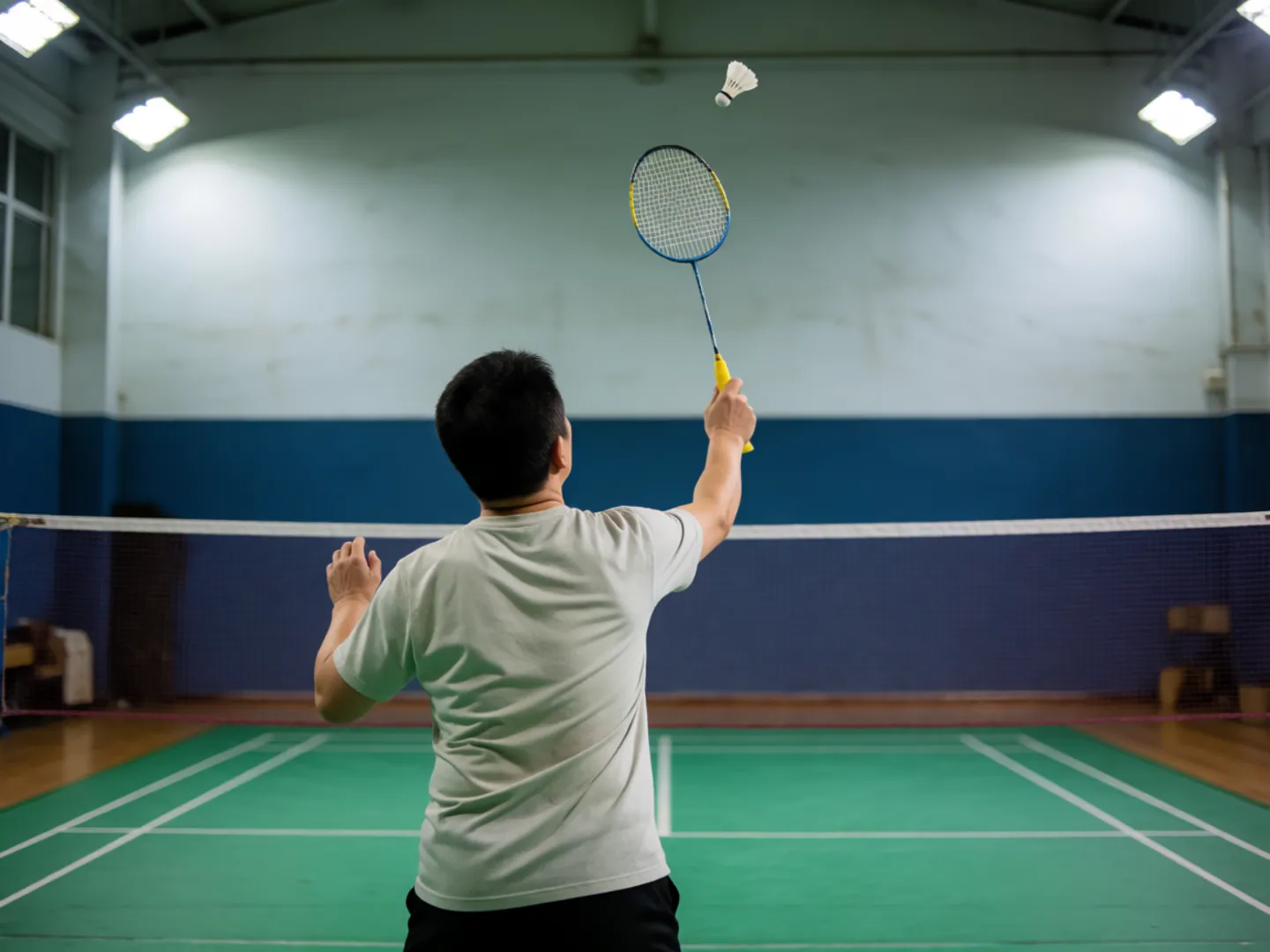
Feather shuttles change with the air in the hall. These are the checks the Laws and reference guides describe.
Hit a full underhand stroke from over the back line, upward and straight down the court. A correct shuttle lands 530 to 990 mm short of the far back line.
Humidity and altitude change how far a shuttle flies, so different weights are used for local conditions. National associations may approve variations.
Reference guides say feather shuttles should be humidified for at least 4 hours before play: dry feathers break and wobble, soaked ones fly too far.
A broken feather can send the shuttle off line. Guides suggest replacing feathers every three or four games, or sooner if one stops flying straight.
FEATHERS OR PLASTIC
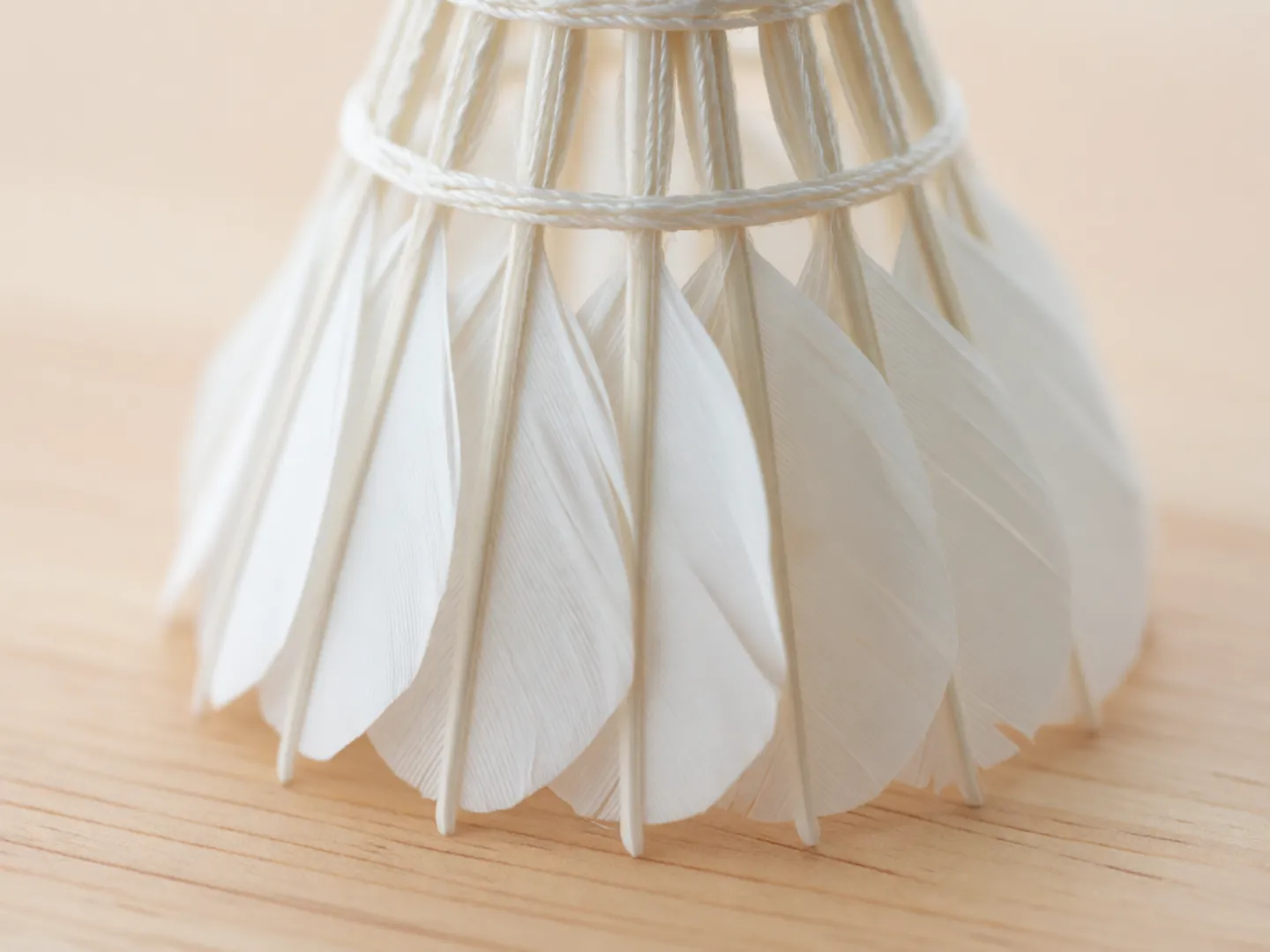
The Laws allow natural or synthetic shuttles, but say any shuttle should fly much like a feathered one with a cork base covered in thin leather. Synthetic skirts may vary by up to 10 per cent in measurements and weight.
Players notice the difference. Plastics come off the racket more slowly but slow down less at the end, and fall more on a diagonal, while feathers drop nearly straight down. Top tournaments use feathers; plastics last far longer.
Questions
Sixteen. The Laws of Badminton say they must be 62 to 70 mm long, with their tips on a circle 58 to 68 mm across, fixed into a rounded base 25 to 28 mm in diameter.
Between 4.74 and 5.50 grams under the Laws. Synthetic shuttles may vary by up to 10 per cent because their materials differ from feathers.
Its open cone makes it extremely stable aerodynamically. Whatever way it starts, it turns to fly cork first and stays that way, with the feathers trailing behind.
Guinness World Records lists 426 km/h as the fastest hit by a male player in competition, in 2017. In a study of 77 players, top smash speeds ranged from about 24 to 82 m/s.
Hit a full underhand stroke from over the back boundary line, upward and parallel to the side lines. A shuttle of correct speed lands 530 to 990 mm short of the opposite back boundary line.
Sources
ABOUT THIS NAME
doodlebad.com is part of the DoodleSale portfolio. It isn't in an auction right now, but you can ask about leasing it.